Pet Peeve
This may not be the best first creative tip of the year but I want to get one thing off my chest and be done with it for the year. I came of age in the information technology era. Oddly enough, I don’t always appreciate where technology has taken us. Over the years here on the blog, I have repeatedly mentioned how often technology complicates things.
That said, I do appreciate some advances, but those are oft times far outweighed by the things I truly abhor. Don’t get me wrong (I bet you kind of cringe when someone starts a sentence with that phrase 😉 it frequently means that what’s coming next won’t be all good) but I admit technology does have some advantages.
I’ll try to keep this brief but it is something about which I have genuine concerns. And now on to “the speech”…
Soap Box
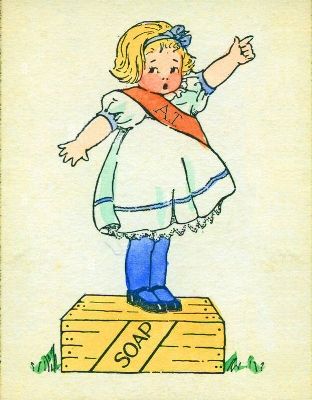
Yes, this is going to be rather a “Soap Box” moment for me. This has been eating at me for more than a little while and I finally have to say something!
I love the way technology allows me to have a wonderful, digital, creative life. What I don’t love is how technology has created something that I fear will one day completely destroy authentic creativity in our digital world – Artificial Intelligence (AI).
Art has been an important part of my life for as long as I can remember. In high school I had a dream to be a commercial artist. As life happened, I ended up in the computer technology industry instead. Not all bad, I cut my teeth on graphic arts during that career.
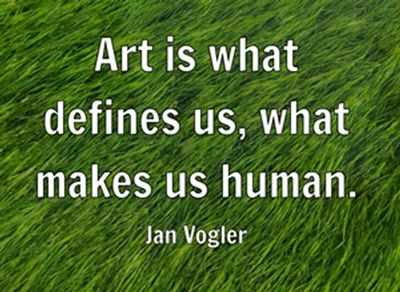
Art is a defining human endeavor, not just for those formally called “artists” but for everyone; including us digital scrappers/artists. It is not merely about arranging colors, forms, sounds or words into pleasing products.
The essence of art is the belief that, in the act of creating art, one saturates an object with something indescribable from within one’s own soul. This belief, in turn, allows for another person to commune with the artist at a level that mere words cannot access.
AI has been cleverly, quietly seeping into nearly every nook and cranny of our lives. AI has invaded our phones, browsers, email and text editors…the list goes on. It kind of reminds me of confetti and glitter; it’s everywhere and shows up in the least expected or desirable places.

AI is influencing more than our creativity. Artists are watching the skills that they have spent their life sharpening being devalued before their eyes. When artwork is invented by a machine, it loses its most important power – helping people connect.
In an era already plagued by separation, discord, and a thinning sense of the real, we should be wary of anything that further erodes our capacity for human connection.
The Good, The Bad & The Scary
There is no denying that AI has changed our lives. However, some (like me) might argue that it’s not completely for the better.
There’s little question that AI is transforming industries and everyday life. From healthcare and finance to agriculture and cybersecurity, AI is driving innovation, increasing efficiency, and solving complex challenges. AI and robotics can literally open doors for people living with physical disabilities.
AI can be good for art by providing tools for inspiration and experimentation. It can be used as a tool for brainstorming and discovering new creative possibilities.

AI is a powerful tool that can easily be misused. In general, AI “learns” only from the data it is fed. If the designers do not provide honest, factual, representative data, the results can become biased and unfair or just plain inaccurate.
As AI art becomes pervasive, we are at a crossroads. Soul-diminishing substitutes for art, which reduce it to mere objects while erasing us as human subjects, threaten to destroy the social relations that real art sustains.

The most frightening part about AI is that not only is it influencing our decision making there’s the potential for spreading misinformation through deepfakes and large-scale manipulation. The ability of AI to generate convincing fake content can make it difficult to tell truth from fiction, potentially compromising our shared sense of reality and trust.
It is not simply that AI lacks originality; after all, so too does some human art. The problem runs far deeper. The essence of art is lost in the process of its mechanized invention and with it, the very possibility of disrupting the aesthetic dynamic upon which humanity depends.
Re-Framing AI
AI technology is a solution to a problem that never really existed. Artists, as much as they like to complain about the struggle of the creative process, thrive best when making things. The creative process is incredibly rewarding, even if the final piece doesn’t match up to the original vision.
It is incumbent upon all of us to continue producing authentic, human created art! Machine generated art has no soul, no life. It is a facsimile of what is real.
True art requires human emotion, intentionality, and the unique, personal experiences of the creator. Humanity breathes life into the art. The machine, even with all its algorithms, cannot!
Authentic art cannot be captured by words or concepts and loaded into algorithms; it cannot be explained, only felt. What we feel in the encounter with real art, is all about the relief of feeling connected – knowing that someone else breathed and dreamed and loved and raged and knew loneliness the way we all do. AI generated art is the exact opposite.

In a time tormented by loneliness, alienation and a thinning sense of the real, we should be opposed to anything that further erodes our ability to make connections. Rather than embracing AI, we should be concentrating on a different kind of AI…AUTHENTIC INTELLIGENCE.
While AI art poisons the soul, real art-and creativity is a form of caring for the soul, both our own and others’. Art has always been a way of revealing ourselves to one another – of ceaselessly generating new meaning in response to the impossibility of capturing feelings – and of honoring the distance and differences between each of us without erasing them.
AI can generate images, manufacture compositions and feign a stylistic fingerprint. But it cannot reach toward the other and their otherness in order to affirm and nurture our own. And without that, there is no art – only the sterile echo of a machine creating artificial images that stir no human emotion or create a connection.
In Closing
To say that the consequences of AI is a problem for future generations is to simply ignore the reality right in front of our faces. Our everyday lives are already being influenced. AI, in its current form, is largely unregulated and unfettered. We need to be super careful with AI. It’s capable of vastly more than almost anyone knows, and the rate of expansion is exponential.
AI wants to alter my writing. Seemingly to make me sound smarter and more professional. But in real life, that’s not my normal self. I can tend to ramble (as you well know). And occasionally I don’t use proper grammar. Even my granddaughter has called me out on that 😊.
AI wants to make it look like all my photographs are stunning. Again…not in my real life. If on rare occasion I get the perfect shot, believe me, it’s just a fluke. I can’t even manage to snap a photo and keep the horizon level 😉
When I’m gone, I don’t want future generations to say, “Gosh, I could never begin to accomplish what Debbie did; she must have been truly skilled.” Instead, I want them to say, “Oh my, I really love the art and stories Debbie created; she seems to have been very heartfelt and genuine!”
I will reluctantly admit that there is a place (perhaps small) for AI, but we shouldn’t let AI alter who we are, the authentic art we try to create and the real, honest stories that we tell.
You and I are the current generation of artists and storytellers. We should be crafting our art and telling our stories authentically not artificially!
And think about this: The greatest advantage of being AUTHENTIC is that it earns you the trust and respect of those around you. – Simon Sinek
Thanks for putting up with my “soap box” rant this week. Remember, if you have any comments, suggestions or questions please don’t hesitate to “Message Me“. Check back next week for some real tips about Lassos. Click “Follow Me” to stay in touch. I hope you have a wonderful week!